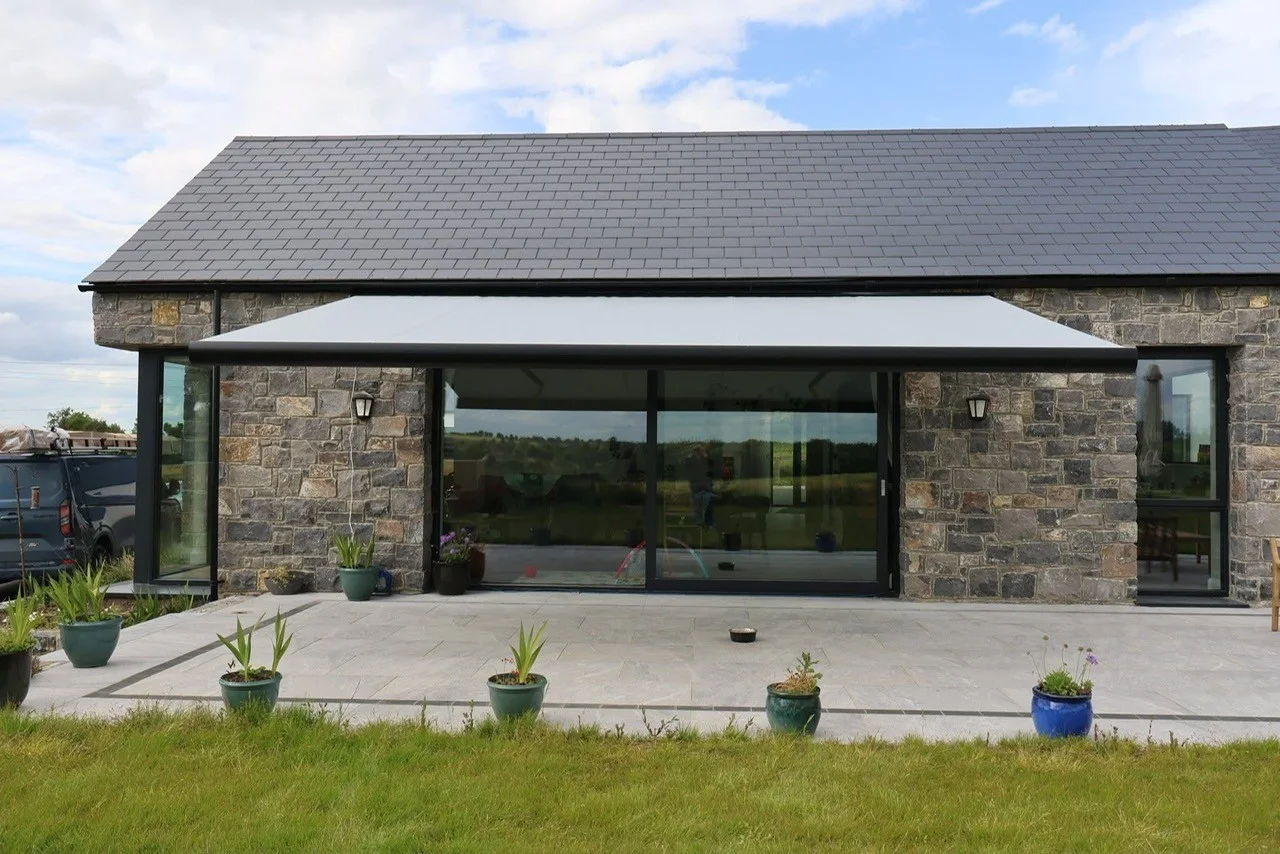
Motorisation is one of the upgrades that changes how often an awning gets used. A large retractable awning may look simple from the outside, but opening several metres of fabric by hand is very different from pressing one button while carrying food onto the patio or closing the system before leaving the house.
For many homeowners in Ireland, the question is not whether a motorised awning works, but which controls are genuinely useful and which are optional extras. The best specification depends on the size of the awning, how exposed the property is and how you want to use the system day to day.
Why motorisation makes sense on larger awnings
On compact systems, manual operation can still be perfectly practical. As width and projection increase, motorisation becomes more attractive because it gives smoother, more consistent operation and removes the effort of winding the awning in and out.
A wall switch or handheld remote is often enough. Some clients prefer app control or integration with a wider smart-home setup, especially where they already use connected blinds, lighting or heating.
What does a wind sensor actually do?
A compatible wind sensor is designed to help the awning react when movement or wind reaches the sensor's trigger level. Depending on the chosen system, that may mean an automatic retract command is sent to the motor.
Remote, app or smart-home control?
- Remote control: simple, reliable and usually the easiest option for everyday use.
- App control: useful if you want to operate compatible shading from a phone or include it in routines.
- Smart-home integration: can make sense when awnings, internal blinds and other devices are already connected through a compatible platform.
The right choice is the one you will actually use. A complicated setup is not automatically better than a good remote and a correctly specified sensor.
What about LED lighting?
Integrated LED lighting is another popular option because it extends the usefulness of the patio into the evening. Depending on the awning model, lighting may be built into the front profile, arms or both. Dimming can also be available on selected systems.
What should be decided during the survey?
Before selecting controls, the installation itself needs to be right. Width, projection, wall construction, bracket positions, cable routes and exposure all influence the final specification. The motor and accessories should be selected after those basics are understood.
If you are comparing options, it is useful to see the controls in person and decide how much automation you actually want. AD Solutions can demonstrate motorised shading and discuss compatible control options at the Clane showroom.